

How to Make a Perfect Flat White

There’s a reason flat whites have quietly taken over menus everywhere, and no, it’s not just because they sound fancy. They hit that sweet spot between strong and smooth, bold and silky, without going full latte or leaning into cappuccino foam land. If you’ve ever ordered one and thought, “Okay but how do I actually make this at home without wrecking it?”, we’ve got you. With just a few tricks, the right milk-to-espresso ratio, and a little patience with your pour, you can absolutely nail it in your own kitchen. No café queue, no confusing names, just seriously good coffee.
What Is a Flat White Coffee?
A flat white is a coffee made with a double shot of espresso and steamed milk that’s textured into a fine, velvety microfoam. What sets it apart is the ratio of espresso to milk, there’s less milk than in a latte, which means the espresso flavor doesn’t get buried. And unlike a cappuccino, it skips the thick foam cap and instead goes for a thin, silky layer of microfoam that blends right into the coffee. The result? Strong, smooth, and creamy without being frothy or milk-heavy.
Now, about where it comes from, Australia and New Zealand have been arguing about that one for decades. Australians say the flat white started showing up on menus as early as 1983. New Zealanders point to cafes in Auckland and Wellington using the term in the mid-80s1. There’s no final ruling, but we’re happy to sip while they sort it out.
As for the U.S., the flat white was pretty much unheard of until 2015, when Starbucks decided to make it a thing. They added it to their menu and introduced the term to a whole new group of coffee drinkers2. Since then, it’s become a regular feature at specialty cafes and in kitchens where people care about getting the espresso-to-milk balance just right.
How to Make a Flat White at Home
It’s totally possible to make a flat white at home without needing a commercial-grade machine or a barista certification. That said, a few basics go a long way in getting it right.
Flat White Ingredients
- Double shot of espresso (about 60 ml)
- 120 to 130 ml of milk, ideally whole milk for the creamiest texture
Optional: Plant-based alternatives like oat, almond, or soy work too, though foam results can vary depending on the brand and how well it steams.
Equipment Needed
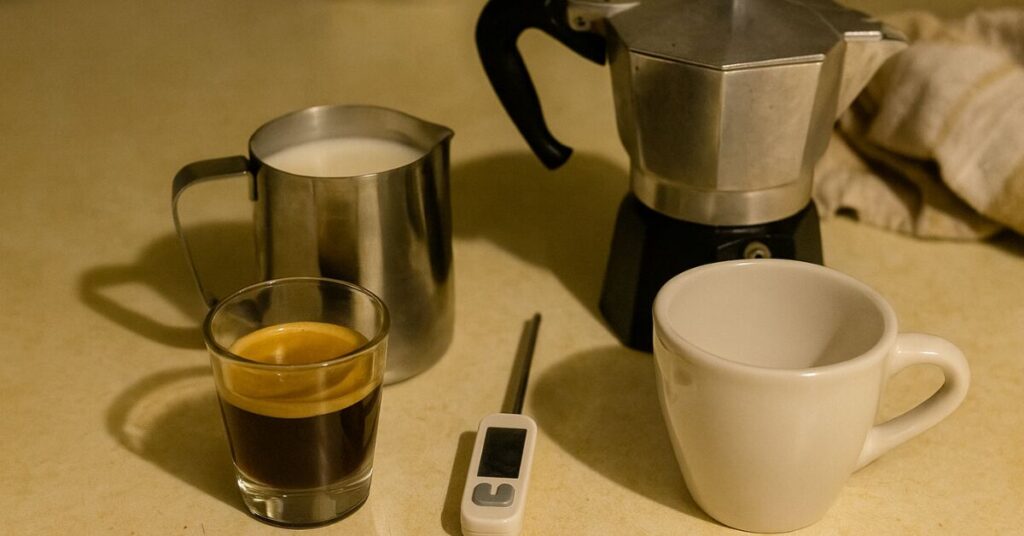
- Espresso machine or any coffee maker that can brew real espresso, no, a drip machine won’t cut it.
- Milk frother or steam wand to get that velvety texture.
- Thermometer if you want to keep the milk temp in check (optional, but helpful).
- 5-6 oz ceramic cup because a flat white isn’t meant to be supersized.
Flat White Ratio
The ratio is simple: 1 part espresso to 2 parts steamed milk. That means you’ll need a double shot of espresso, about 60 ml, and 120 to 130 ml of milk. It’s that balance that gives the flat white its signature strength without making it too heavy or overly milky.
Your foam game matters too. You want microfoam, not a giant puff of bubbles. Aim for a layer that’s around 0.5 cm thick. It should look flat on top, that’s where the name comes from.
Step-by-Step Instructions
1. Prepare the Espresso
Start by pulling a double shot of espresso straight into your cup. Use freshly ground beans if possible, they make all the difference. If you’re using pre-ground coffee, make sure it’s fine enough for espresso and packed properly in the portafilter.
2. Steam the Milk
Measure 120 to 130 ml of milk, ideally whole milk. Steam it to 60 to 65°C, or about 140 to 149°F. You want to create microfoam, not regular foam, that means small, smooth bubbles, almost like wet paint. If you’re using a thermometer, stop steaming just before the milk hits your target temperature, since it continues to heat slightly afterward.
Hot Tip: If you’re using a milk frother, choose one with a microfoam setting or manually swirl the milk after frothing to break up any larger bubbles.
3. Combine
Hold the cup at a slight angle and pour the milk in slowly. Start from a little higher up so the milk slips under the crema, then move the pitcher closer to the surface once you’re nearly done to let the microfoam layer settle right on top. You should see a flat, even surface, not a foamy dome.

You’re done. Sip and adjust as needed, but if your ratio was right and your milk texture was on point, you’ll know.
Tips for the Perfect Flat White
Getting a flat white right is all about the little details. These aren’t just “nice to know” tips, they’re the things that separate a good cup from a so-so one.
Milk Texture: Your goal is smooth, velvety microfoam with tiny, barely visible bubbles3. If the foam looks fluffy or you see large bubbles floating around, it’s too frothy. Microfoam should look almost glossy and pour like thick cream. Swirling the milk jug before pouring can help even out the texture.
Pouring Technique: Don’t rush this part. Pour slowly and steadily, starting from a bit higher to let the milk dive under the espresso. Then, as the cup fills up, lower the pitcher and let the microfoam drift to the top. If you’re feeling bold, give it a little wiggle at the end, that’s how you get the base of latte art. No pressure if it’s just a blob though. Still tastes great.
Milk Temperature: Keep the milk between 60 and 65°C, or 140 to 149°F. Anything hotter, and you risk scalding it, which flattens the sweetness and leaves a burnt aftertaste. If you don’t have a thermometer, touch the side of your pitcher, if it’s too hot to hold for more than a couple seconds, you’ve gone too far.

Some Common Mistakes to Avoid
Even if you’ve got great beans and a shiny machine, these slip-ups can ruin your flat white. They’re all fixable though, you just have to know what to watch for.
a. Too Much Foam
A flat white is not a mini cappuccino. It should have a very thin layer of microfoam, just enough to create that smooth, creamy surface. If the top of your drink looks puffy or foamy, you’ve crossed the cappuccino line.
b. Incorrect Ratios
Pouring in too much milk can mute the espresso completely. Stick to that 1:2 espresso-to-milk ratio. It’s what gives the flat white its signature strength and balance. If it tastes more like a latte, you’ve probably gone too heavy on the milk.
c. Overheating Milk
Scorched milk is a fast way to ruin a good espresso. Overheating kills the natural sweetness and makes the drink feel heavy or flat. You want the milk warm enough to bring out the flavor, not so hot that it overpowers everything else.
Flat White vs Latte vs Cappuccino
If you’ve ever stood in line at a café, staring at the menu like it’s a multiple-choice test you forgot to study for, you’re not alone. They all start with espresso and milk, sure, but they’re not interchangeable. Each one has its own personality, and if you care about coffee (which, hello, you do), it’s worth knowing the difference.
The easiest way to get it? Let’s line them up side by side.
| Drink | Espresso | Milk | Foam | Cup Size | What It Tastes Like |
| Flat White | Double shot | Less milk | Thin, velvety microfoam | 5–6 oz | Strong, smooth, creamy without froth |
| Latte | Single or double | More milk | Light layer of foam | 8–12 oz | Milder, creamier, more mellow overall |
| Cappuccino | Single shot | Equal parts milk and espresso | Thick, foamy top layer | 6 oz | Frothy, layered, slightly drier with foam cap |
Now, why pick a flat white over the others?
Because it’s the best of both worlds. The espresso flavor stays bold and upfront, but the milk softens it just enough without drowning it. And the microfoam? That stuff blends right into the drink instead of floating like a bubble bath. It’s espresso-forward without being harsh, creamy without being heavy, and smooth enough to make you sip slower just to stretch it out.
Lattes are great when you want something cozy and milky. Cappuccinos are for foam lovers and anyone who likes to sprinkle cinnamon like they’re on a cooking show. But flat whites? They’re the go-to when you want balance without fuss.
No wrong choices here, just different moods in a mug.
Flat White Variations
Yes, purists might stick to the original formula, but let’s be honest, coffee people love a remix. These variations still keep the essence of a flat white while adding a twist or two for different vibes and preferences.
1. Iced Flat White
For hot days or just cold drink fans, you can pour your double espresso over ice and top it off with chilled milk and microfoam. Some folks like to shake the milk before adding it to keep that texture creamy without heating it. It’s refreshing and gives you that same rich taste without the warmth.
2. Alternative Milks
Using plant-based options like almond, soy, oat, or macadamia can absolutely change the flavor and mouthfeel. Oat is a favorite for getting close to that whole milk creaminess, while almond gives a nuttier edge. Just know that not all non-dairy milks froth the same, so microfoam takes a little extra care.
3. Sweeteners and Flavors
Some mornings just need a little extra. You can add syrups like vanilla, caramel, or hazelnut, or even go wild with a sprinkle of cinnamon or nutmeg. Just don’t overdo it, the flat white is built around balance, so whatever you add should still let the espresso do its thing.
Go Make the Damn Flat White
Once you’ve got your espresso, milk, and timing dialed in, flat whites start to feel way less intimidating and way more doable. Sure, your first few might look like a science experiment, we’ve been there, but once the muscle memory kicks in, it just becomes part of your morning. The beauty of it is that it doesn’t ask for much, just a little attention and a steady pour. If you’ve been putting it off or overthinking it, consider this your cue. Go make the coffee. The real kind. The kind that doesn’t come in a giant paper cup with a lid that doesn’t quite fit.
FAQs
1. Why is it called a ‘flat’ white?
Because the surface should be flat, not puffy or mounded with foam. The microfoam sits in a thin layer that blends into the espresso instead of floating on top like a cappuccino. Simple, but kind of genius.
2. Can I make a flat white without an espresso machine?
You can get close, but it’s tricky. Moka pots and AeroPress with the right filter setup can mimic espresso strength, though the pressure isn’t quite the same. You’ll get a strong base, but it won’t have the same crema or body as a true espresso shot.
3. What kind of beans are best for flat white?
Medium to dark roasts usually work well because they bring out the boldness you want under milk. Lighter roasts can get a bit lost unless you really fine-tune the milk ratio. Go for something balanced, chocolatey, nutty, even a little fruity if you’re into that.
4. Does the type of milk affect the foam quality?
Absolutely. Whole milk makes the smoothest, richest microfoam thanks to its fat and protein content. Skim milk foams easily but can feel dry. Plant-based milks vary a lot, oat tends to perform best, but barista blends of almond, soy, or macadamia can also hold up if you steam them right.
5. Why does my milk get bubbly instead of smooth?
That usually means you’re adding too much air during steaming or not swirling it enough after. Keep the steam wand just below the surface for a second or two, then drop it deeper to heat without introducing more air. Swirl and tap to smooth it out before pouring.
6. Can I reheat milk if I mess up the first batch?
Nope, sorry. Reheating steamed milk ruins the texture and flavor. If it overheats or splits, start fresh. It’s annoying, yes, but your coffee will thank you.
7. Is a flat white stronger than a regular coffee?
Caffeine-wise, it depends on your base. A flat white made with a double shot of espresso usually has more caffeine than a standard drip cup, but it’s smaller, so you’ll sip it faster. It tastes stronger because there’s less milk diluting the espresso.