
How to Make a Doppio That Actually Tastes Good

There’s something weirdly satisfying about getting a doppio just right, like nailing a pancake flip or finding matching socks on laundry day. If you’ve ever sipped one that made your eyes widen a little, you know the feeling. It’s bold, smooth, and totally different from the watery stuff pretending to be coffee. But pulling a solid doppio at home? That takes a bit of know-how, a few tweaks, and a gentle nudge away from the most common espresso no no’s. Good news is, you don’t need a barista badge to figure it out, just a little guidance and the right kind of curiosity.
What is a Doppio Anyway
Let’s clear up the jargon because we’ve all seen the word doppio on a menu and paused for a second. A doppio espresso isn’t some rare variation pulled only by bearded baristas in secret basements. It literally means double in Italian. That’s it.
So when someone asks, what is doppio, they’re really just asking for two shots of espresso in one cup. No extra water, no milk, no fluff. It’s the real deal, just doubled up.
The doppio coffee meaning is straightforward. It’s espresso, but twice the amount of a single shot. Same strength, same method, but you get more of that bold, rich flavor we chase. If you’re thinking, wait, isn’t that a double espresso?, you’re spot on. Doppio vs double espresso is just a language thing, not a recipe difference.
And yes, it’s traditionally served in a demitasse cup, which sounds fancier than it is. It’s just that small espresso cup you’ve seen in every Italian café scene ever. The flavor? Intense, smooth, and balanced when it’s made right.
Why People Love It (and Why You Might Too)
There’s a reason the doppio espresso has serious fans. For starters, it’s twice the volume of a single shot, but when you pull it right, it still tastes silky, smooth, and balanced. You’re not just doubling the caffeine, you’re doubling the depth of flavor without falling into that burnt or bitter trap.
It delivers that strong espresso flavor so many people crave, without punching your taste buds in the face. It’s bold, yes, but also refined if your technique is on point.
What makes it even more lovable is its versatility. You can sip it straight like a purist, or use it as a base for everything from Americanos to flat whites. It’s your espresso foundation, no matter how dressed up (or stripped down) you like your coffee.
And when your machine is dialed in, your grinder is doing its job, and your beans are fresh, you’ll get that gorgeous crema on top. That golden layer isn’t just pretty, it’s flavor-packed and gives your doppio that final polish.
The Golden Rule of Doppio Size
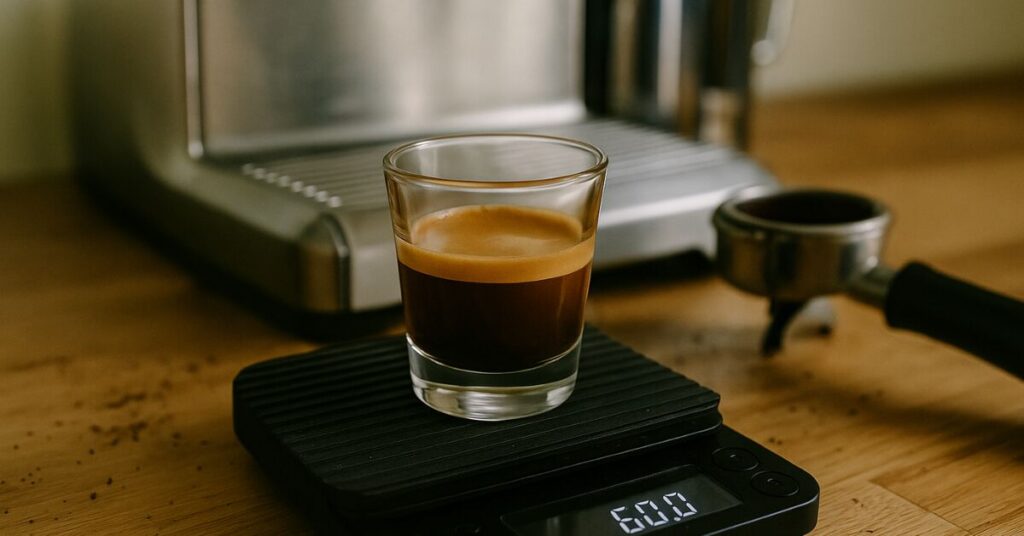
This one’s simple. The standard doppio size is 60 ml, or 2 ounces. That’s the target. No refills, no adding extra water to make it stretch. It’s a double shot, not a short Americano.
But here’s the thing, a lot of places mess this up. They stretch the shot beyond 60 ml thinking “more must be better”, and that just waters it down. What you get then is a weak espresso that tastes hollow instead of full-bodied.
So if you’re pulling a shot at home and want to nail your doppio recipe, grab a scale or a shot glass with markers, and check the output. If you’re landing around 60 ml, you’re exactly where you need to be.
The Gear You Need
Before you can pull a solid doppio espresso, you’ll need the right gear. And no, you don’t have to spend thousands, but quality tools definitely make a difference.
- An espresso machine with at least 9 bars of pressure is essential. Semi-automatic or manual machines give you the most control.
- A double basket portafilter, because you’re brewing two shots in one go.
- A coffee scale, because guessing doesn’t cut it. Precision matters here.
- A grinder that can handle espresso-fine grinds. Burr grinders, not blades.
- A tamper that fits your portafilter snugly. Wiggly tampers are a silent shot killer.
- Fresh, high-quality espresso beans, ideally a medium or dark roast for that rich body.
- Optional but super helpful, a bottomless portafilter. It shows you exactly how your shot is pulling, and yes, it makes great crema photos.
How to Make a Doppio Without Ruining It
This is the doppio recipe baristas actually use, and once you get the hang of it, you’ll wonder why you ever settled for anything else. No drama, just the steps.
1. Weigh your coffee dose
You’re aiming for 16 to 18 grams of finely ground coffee in the basket.
Hot Tip: Try starting with 17 grams. It’s the sweet spot for a lot of setups. Small tweaks can make a big difference, so don’t be afraid to experiment.
2. Grind fresh and fine
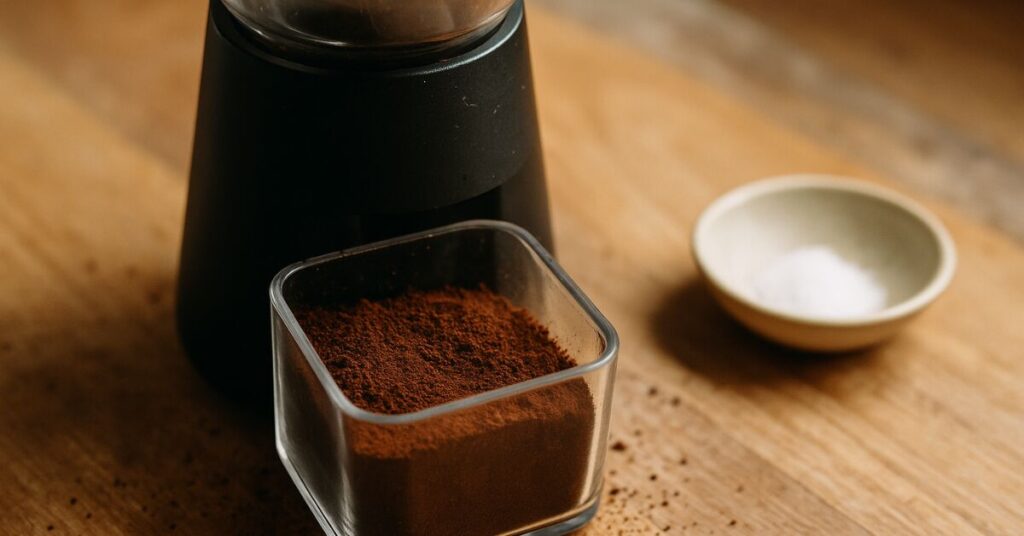
Grind your beans just before brewing, and aim for finer than table salt, but not so fine it turns into powder.
If your grind is too coarse, your shot will taste sour and underwhelming. Too fine, and your machine will struggle, leading to bitterness and frustration.
3. Distribute and tamp evenly
You want an even bed of coffee so water flows through the grounds consistently.
Use your finger, a WDT tool, or a leveler to distribute evenly.
Then tamp once, firmly and evenly. Don’t twist, don’t double-tamp. That introduces uneven pressure, and your espresso will let you know by misbehaving.
4. Pull the shot
Start your timer as soon as you hit the button. A proper doppio should take 25 to 30 seconds to pull, depending on your grind and machine.
You’re aiming for 60 ml, or 2 ounces, of espresso. If it runs too fast, your grind is too coarse. Too slow? Probably too fine or too much coffee.
5. Sip and adjust
Taste tells all. If it’s too bitter, try grinding a little coarser or reducing the dose.
If it’s sour, go finer or bump up your dose slightly.
Don’t be discouraged if your first try isn’t perfect. Getting your doppio dialed in is a process, and you’ll learn something every time you tweak it.
Common Mistakes That Wreck a Doppio
There’s no shame in messing up a doppio espresso, especially in the beginning. We’ve all had that sad, bitter shot that made us question everything. But if you know what to avoid, you’re already ahead.
What Makes a Good Doppio Taste Great
When a doppio is pulled just right, there’s a kind of magic in the cup. You’ll know because it hits all the right notes without trying too hard.
1) It starts with balance. A great doppio won’t lean too bitter or too sour. It dances somewhere in the middle, rich and round without any sharp edges.
2) Then there’s the crema. This is that golden, slightly foamy layer on top that tells you your shot has been pulled like a pro. It should be thick enough to hold the trace of a spoon and swirl with a hint of tiger-striping.
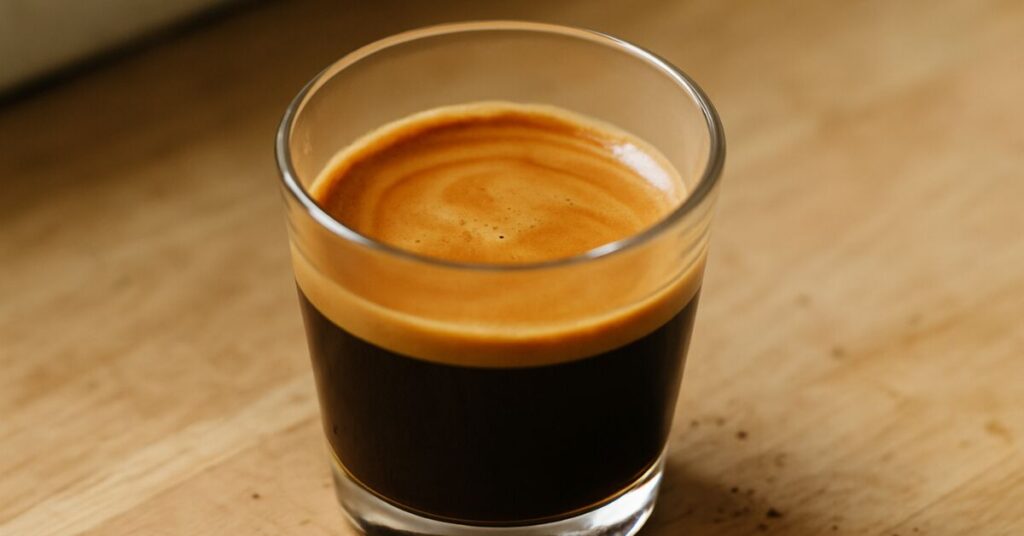
3) Mouthfeel matters too. You want it to coat your tongue, not strip it bare. It should feel smooth and full, almost like a warm espresso hug.
4) And finally, the temperature has to be just right. It should land somewhere between 150 and 160°F when it hits your lips. Anything hotter, and you’re risking a scorched taste. Anything cooler, and it starts to lose that intensity that makes a doppio worth chasing.
Nail those four, and you’re not just drinking espresso, you’re sipping something pretty close to perfect.
Doppio Variations You Might Accidentally Love
Once you’ve got your doppio espresso routine locked in, it’s fun to play around with it a little. You don’t have to be a coffee snob to enjoy mixing things up now and then. Some of these twists might even sneak into your daily rotation without warning.
1. Iced Doppio
What you need:
- Freshly pulled doppio
- A glass full of ice
How to make it:
Pour your hot doppio straight over the ice, give it a quick swirl, and sip. It’s bolder than cold brew and ready in 30 seconds.
2. Doppio Macchiato
What you need:
- One doppio shot
- A spoonful of milk foam
How to make it:
Pull your doppio, then gently spoon a bit of foam on top. It’s still strong, just kissed with creaminess.
3. Affogato-Style Doppio
What you need:
- One scoop of vanilla gelato
- A hot doppio
How to make it:
Drop the gelato into a small bowl or glass, pour your doppio over it, and enjoy dessert and coffee in one glorious bite.
4. Mini Cortado
What you need:
- One doppio
- 2 oz steamed milk
How to make it:
Add equal parts steamed milk to your doppio. It’s silky, smooth, and surprisingly easy to nail at home.
5. Doppio Americano
What you need:
- One doppio
- 4–6 oz hot water
How to make it:
Pour hot water into a mug first, then add your doppio on top. This helps preserve the crema and gives you a mellow, sippable cup.
Can You Make a Doppio Without a Machine? Sort of.
We get asked this a lot. If you don’t have an espresso machine, can you still get something that tastes close to a doppio? Technically, real espresso needs pressure, around 9 bars of it, which is tough to fake. But you can get close with the right tools.
A Moka pot is the go-to for a lot of folks. Use fine grounds and watch the heat. The result isn’t true espresso, but it’s concentrated and flavorful enough to pass for one in a pinch.
The Aeropress is another solid option. Use the inverted method, apply max pressure, and go for a short brew time. You won’t get crema, but you will get something strong and smooth, especially if your beans are fresh.
And then there’s the manual lever crowd. Machines like the Flair or Cafelat Robot are built for pressure, and with some patience, they can actually produce a real-deal doppio espresso. There’s a learning curve, but the results are legit.
Is it going to be exactly like the stuff your local café pulls on a $10,000 machine? Probably not. But it’s way closer than drip coffee or a standard pour-over, and if you love espresso, it’s totally worth the experiment.
Your Machine’s New Favorite Routine
Once you’ve had a proper doppio, there’s no going back. It hits differently, in the best way. It’s rich without being too much, and smooth enough to enjoy straight if you’re feeling bold. Making one at home doesn’t have to feel technical or intimidating. It’s just a mix of good habits, fresh beans, and a few small decisions that add up to something kind of great. Try it a few times, make tweaks based on how it tastes, and let yourself mess it up once or twice. That’s part of the fun. Eventually, you’ll get to the point where you can tell just by looking at the crema that it’s going to be a good one.
FAQs
1. Can I use a light roast for a doppio?
You can, but it’s tricky. Light roasts are harder to extract, often taste brighter or more acidic, and usually require more precise dialing in. If you’re still learning, a medium or dark roast will be more forgiving and give you a smoother result.
2. What kind of water should I use for espresso?
Filtered is the way to go. Tap water can mess with both flavor and your machine’s health, especially if it’s high in minerals. Soft but not distilled is the sweet spot. If your coffee tastes flat or harsh, your water might be the culprit.
3. How long do espresso beans stay fresh?
Whole beans are happiest within 7 to 21 days after roasting. After that, they lose aromatics fast. Store them in an airtight container away from light and heat. Pre-ground loses quality even quicker, so grind right before brewing when possible.
4. Is there a difference between a double shot and a lungo?
Yep. A doppio is two standard espresso shots, around 60 ml total. A lungo uses the same amount of coffee but more water, so it takes longer to extract and ends up more diluted, with a different flavor profile. Think lengthened, not doubled.
5. Why does my espresso taste burnt?
Usually, it’s an issue with temperature or extraction time. Your water might be too hot, your grind too fine, or your shot running too long. Old beans or an unclean machine can also add unwanted bitterness.