
How To Make Espresso At Home (With Or Without An Espresso Machine)

Espresso is a strong and flavorful coffee that is enjoyed by a lot of people around the world. While it is often associated with expensive and complicated machines, it is possible to make espresso at home using a variety of methods. Whether you have an espresso machine or not, there are ways to make a delicious cup of espresso without breaking the bank.
In this guide, we will explore different methods for making espresso at home, including using an Espresso machine, a Moka pot, a French press, an Aeropress, and Instant espresso. We will also discuss the pros and cons of each method so that you can choose the one that best suits your needs.
How to Make Espresso With a Machine
Making espresso at home with an espresso machine is a great way to enjoy café-quality coffee without having to leave your house. Here are the steps to follow to make espresso with an espresso machine:
- Fill the water tank of your espresso machine with fresh, cold water.
- Turn on the machine and allow it to heat up.
- Grind your coffee beans to a fine consistency, and place them in the portafilter.
- Tamp down the coffee to ensure an even extraction.
- Place the portafilter into the machine and lock it in place.
- Press the button to start the extraction process. You should see a dark, rich espresso shot start to pour out of the spout.
- Once the shot is complete, remove the portafilter and dispose of the spent grounds.
- Enjoy your freshly brewed espresso!
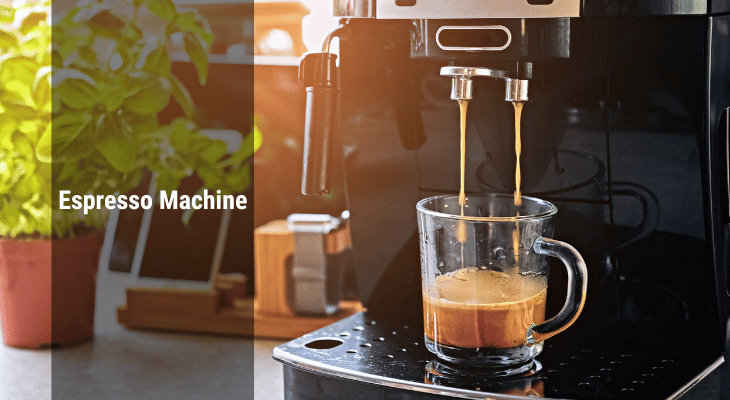
It’s important to note that different machines may have slightly different instructions, so be sure to consult your machine’s manual for specific instructions. Additionally, it’s always a good idea to clean your machine and its parts regularly to ensure the best quality espresso and prolong the life of your machine.
There are several pros and cons to making espresso at home with an espresso machine.
Pros:
- Consistency: With an espresso machine, you can achieve a consistent and precise shot of espresso every time. This means you can replicate your favorite café’s espresso with little to no variation.
- Control: Espresso machines allow you to control the water temperature, pressure, and extraction time, which means you can tweak your espresso to your liking.
- Convenience: With an espresso machine, you don’t have to leave your home to enjoy café-quality coffee.
- Variety: Using an espresso machine, you can make a wide range of espresso-based drinks, such as cappuccinos, lattes, and macchiatos.
Cons:
- Cost: Espresso machines can be quite expensive, especially if you’re looking for a high-quality model.
- Complexity: They can be complex to use, especially for beginners. It takes time to learn how to make the perfect shot and how to maintain the machine.
- Space: Espresso machines are quite bulky and take up a lot of counter space.
- Cleaning: Espresso machines require regular cleaning and maintenance to ensure the quality of espresso and extend the life of the machine.
Overall, espresso machines provide a consistent, precise and convenient way to make espresso at home with the ability to make a wide range of drinks, but it comes with a high cost, complexity, space consumption and maintenance.
How to Make Espresso Without a Machine (4 Methods)
While espresso machines are the traditional way to make coffee, they can be expensive and not everyone has access to one. But that doesn’t mean you can’t enjoy a delicious cup of espresso at home.
In this section, we will explore different methods for making espresso without an espresso machine. We will cover brewing espresso with a Moka pot, a French press, an Aeropress, and instant espresso. These methods are all easy to use, affordable, and can produce a flavorful cup of coffee that is similar to traditional espresso.
Method 1: How To Make Espresso With A Moka Pot
Making espresso at home with a Moka pot, also known as a stovetop espresso maker, is a simple and affordable way to enjoy café-quality coffee without an expensive machine. Here are the steps to follow to make espresso with a Moka pot:
- Fill the bottom chamber of the Moka pot with fresh, cold water. Make sure to not overfill or underfill the water chamber. It should be filled just below the level of the safety valve.
- Add ground coffee to the filter basket. Use a fine grind, similar to what you would use for an espresso machine.
- Assemble the Moka pot by screwing the filter basket onto the bottom chamber.
- Place the Moka pot on the stove over medium heat.
- Once the water boils and pressure builds up, the coffee will start to flow into the top chamber. The brewing process should take around 4-5 minutes.
- Once the coffee has finished brewing, remove the pot from the heat and serve the espresso.
- Sip and savor your freshly made espresso!
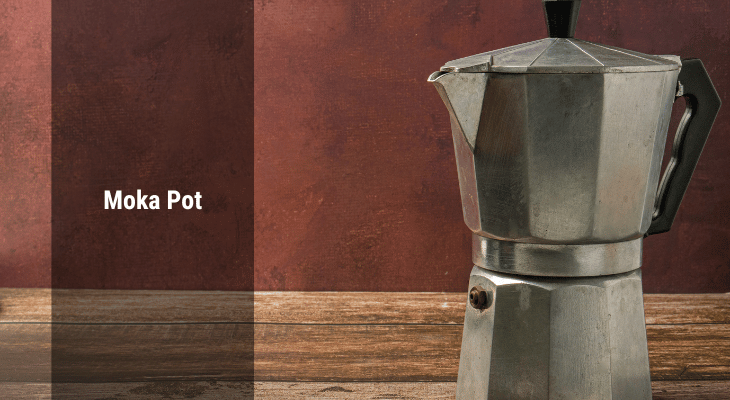
It’s important to note that the Moka pot produces a coffee that is stronger than drip coffee but less strong than traditional espresso and it’s not as creamy. Also, as with any coffee brewing equipment, it’s always a good idea to clean your Moka pot regularly to ensure the best quality coffee.
Enjoying café-style coffee at home can be simple and cost-effective using a Moka pot. However, there are pros and cons to using a Moka pot to make espresso.
Pros:
- Affordable: Moka pots are relatively inexpensive and can be found at most home goods stores.
- Easy to use: They are simple to operate, with just a few basic parts that are easy to assemble and clean.
- Consistency: Moka pots produce a consistent brew that is similar to espresso, with a rich flavor and a thick crema.
- Versatile: They can be used on a stovetop, making them perfect for camping or traveling.
Cons:
- Limited capacity: Moka pots typically only make a few cups at a time.
- Not true espresso: Moka pots do not produce a true espresso, as the pressure and temperature used in the brewing process are not as high as with a true espresso machine.
- Requires constant attention: They need to be watched while brewing to ensure the water doesn’t boil over or the coffee doesn’t burn.
- Not suitable for larger groups: Moka pots are not suitable for serving large groups of people as they can only brew a small amount of coffee at a time.
Overall, a Moka pot can be a great option for those who want to enjoy café-quality coffee at home without breaking the bank. However, it’s important to be aware of the limitations of the Moka pot and to keep in mind that it will not produce a true espresso.
Method 2: How To Make Espresso With A French Press
Making espresso at home with a French press, also known as a cafetière or coffee press, is another simple and affordable way to enjoy café-quality coffee without an expensive machine. However, it’s important to note that, like a Moka pot, a French press will not produce a true espresso, as the French press is designed to make coffee with a coarser grind and longer brew time.
Here are the steps to follow to make a strong coffee that is similar to espresso with a French press:
- Fill the French press with hot water to preheat the press and the cups.
- Discard the hot water and add coarsely ground coffee to the press. A French press typically uses a coarser grind than espresso.
- Add hot water (around 205°F) to the French press, making sure all the coffee grounds are fully saturated.
- Place the lid on top of the press, but don’t press down the plunger yet.
- Let the coffee steep for about 4 minutes.
- Slowly press down the plunger to separate the coffee grounds from the liquid.
- Pour the coffee into a cup and enjoy.

Similar to the Moka pot, the coffee brewed with a French press will be stronger than regular coffee but it will not have the same crema as traditional espresso. Also, as with any coffee brewing equipment, it’s always a good idea to clean your French press regularly to ensure the best quality coffee.
Making espresso at home with a French press is a popular method for brewing coffee, but it is not a traditional method for making espresso. The French press uses a coarse grind of coffee, allowing the coffee to steep in hot water, resulting in a full-bodied coffee with a rich flavor.
Here are the pros and cons of using a French press to make espresso.
Pros:
- Affordable: French presses are budget-friendly and can be purchased at home goods stores.
- Easy to use: French presses are effortless to use with just a handful of basic parts that are easy to put together and maintain.
- Consistency: French presses produce a consistent brew that is full-bodied and rich in flavor.
- Versatile: French presses can be used to make a variety of coffee drinks, not just espresso.
Cons:
- Not traditional espresso: French presses don’t make authentic espresso, as the pressure and temperature applied during the brewing process aren’t as intense as with a genuine espresso machine.
- Requires a coarser grind: French presses require a coarser grind of coffee than traditional espresso machines, which can be more difficult to find.
- Not suitable for larger groups: French presses are not suitable for serving large groups of people as they can only brew a small amount of coffee per cycle.
- Sediment: French presses can leave sediment in the cup which some people might not like.
Overall, using a French press to make espresso is not traditional and may not produce the same quality of espresso as a machine. However, it can be a good option for those who want a full-bodied coffee with a rich flavor without the expense of an espresso machine.
Method 3: How To Make Espresso With An Aeropress
Brewing espresso using an Aeropress is another cost-effective and easy way to enjoy café-quality coffee at home without breaking the bank. The Aeropress is a manual, air-pressure coffee maker that can produce a strong coffee that is similar to espresso.
Here are the steps to follow to make espresso with an Aeropress:
- Heat water to around 175-185°F.
- Assemble the Aeropress by attaching the filter cap to the brewing chamber and inserting a paper or metal filter.
- Add one scoop of finely ground coffee (similar to espresso grind) to the brewing chamber.
- Slowly pour the hot water over the coffee, making sure all the grounds are fully saturated.
- Stir the coffee for about 10 seconds.
- Insert the plunger into the brewing chamber and press down slowly for about 20-30 seconds.
- Once the coffee has finished brewing, remove the filter cap and press the coffee out of the chamber into a cup.
- Enjoy your freshly brewed coffee.
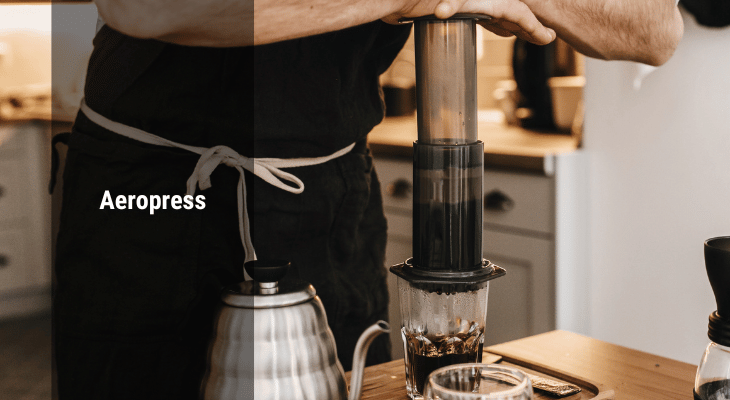
Like the previous two techniques, the coffee made with an Aeropress will be stronger than regular coffee but it won’t have the same creamy top layer as traditional espresso.
Making espresso at home with Aeropress is a relatively new method that has gained popularity in recent years. The Aeropress uses a paper or metal filter to brew coffee, resulting in a clean and smooth cup of coffee.
Here are the pros and cons of using an Aeropress to make espresso.
Pros:
- Affordable: Aeropress is budget-friendly and can be purchased at most home goods stores.
- Easy to use: Aeropress is easy to use, with just a few basic components that are easy to assemble and clean.
- Consistency: Aeropress produces a consistent cup of coffee, with a clean and smooth taste.
- Portable: Aeropress is lightweight and compact, making it perfect for traveling or camping.
- Versatile: Aeropress can be used to make a variety of coffee drinks, not just espresso.
Cons:
- Not traditional espresso: Aeropress does not produce a true espresso, as the pressure and heat used in the brewing process are not as high as with an espresso machine.
- Requires a specific grind: Aeropress requires a specific grind of coffee, which can be more difficult to find.
- Not suitable for larger groups: Aeropress is not suitable for serving large groups of people as it can only brew a small amount of coffee at a time.
- Mild Flavor: The taste may not be as strong as traditional espresso.
Overall, brewing espresso with an Aeropress isn’t a conventional approach and may not yield the same quality of espresso as a real espresso machine. However, it can be a good option for those who want a clean and smooth cup of coffee without the expense of an espresso machine. Additionally, the Aeropress is perfect for travelers or campers looking for a portable and easy way of brewing coffee.
Method 4: How to make espresso with instant espresso
Making espresso with instant espresso powder is a convenient and easy way to enjoy top-notch coffee at home. Instant espresso powder is made by brewing espresso coffee and then dehydrating the liquid, leaving behind a concentrated powder that can be reconstituted with hot water.
Here are the steps to follow to make espresso with instant espresso powder:
- Heat water to around 175-185°F.
- Measure out the desired amount of instant espresso powder, typically about a teaspoon for a single shot of espresso.
- Stir the instant espresso powder into the hot water until fully dissolved.
- Pour the coffee into a cup and enjoy.
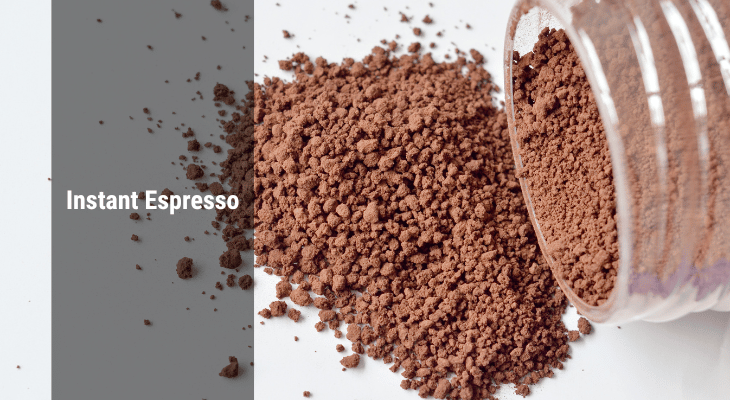
It’s important to note that instant coffee will not have the same flavor and aroma as freshly brewed coffee and also the crema will be less pronounced. Also, you can add milk or sugar to taste.
Making espresso at home with instant espresso is a convenient and easy method for those who want a quick cup of coffee without the hassle of traditional espresso machines or other brewing methods. Instant espresso is made by drying and then granulating brewed coffee, which can be stored for a long time and dissolved in hot water to make a cup of coffee. [1]
Here are the pros and cons of using instant espresso to make coffee.
Pros:
- Convenient: Instant espresso is easy to use and requires no special equipment. Simply dissolve the granules in hot water, and you have a cup of coffee.
- Long shelf-life: Instant espresso has a long shelf-life and can be stored for months, making it a great option for those who don’t use it often.
- Consistency: Instant espresso provides consistent flavor, aroma, and strength every time.
- Portable: Instant espresso is lightweight and compact, making it perfect for traveling or camping.
Cons:
- Quality: The taste of instant espresso may not be as good as freshly brewed coffee and may have a different taste than traditional espresso.
- Processed: Instant espresso is a processed food, which means it could contain additives, artificial flavors, and other ingredients that may not be healthy.
- Expensive: Instant espresso may be more expensive than traditional brewing methods or buying freshly made coffee.
- Limited options: The range of instant espresso options is limited compared to traditional brewing methods.
Overall, using instant espresso to make coffee is a convenient and easy option for those who want a quick cup of coffee without the hassle of traditional espresso machines or other brewing methods. However, it may not produce the same quality of espresso as freshly brewed coffee and may be more expensive in the long run.
Wrapping Up: The Best Methods for Making Espresso at Home
Making espresso at home can be a fun and rewarding experience. There are many ways to make a delicious cup of coffee without an expensive espresso machine, including using a Moka pot, a French press, an Aeropress, or instant espresso. Each method has its own unique pros and cons, so it is essential to consider your needs and preferences before deciding on a method. Whether you are a coffee connoisseur or just looking for a convenient way to make coffee, this guide has something for everyone. With the right tools and a bit of practice, you can make a delicious cup of espresso at home in no time.