

50 Surprising Uses for Used Coffee Grounds

Growing up, my family was always serious about their coffee. We would have several cups of coffee a day, and we always ground our coffee beans fresh. As a result, we ended up with a lot of used coffee grounds that we would just throw away.
However, as I got older and became more environmentally conscious, I started to wonder if there was something else we could do with all those coffee grounds. I did some research and discovered a whole world of uses for coffee grounds that I never even knew existed.
From using coffee grounds as a fertilizer for plants to making homemade coffee soap, the possibilities were endless. I was amazed at how much we had been wasting all those years. Now, instead of just tossing our used coffee grounds in the trash, we make sure to find a new use for them.
Whether it’s using them to repel insects, control wood-ash dust, or as a deodorizer for shoes, there’s always something we can do with our used coffee grounds. It’s all about finding creative solutions and not letting anything go to waste.
So, if you’re like me and go through a lot of coffee, don’t just throw away those used coffee grounds. Get creative and see what other uses you can find for them. You’ll be amazed at how much you can do with a simple, free resource.
In this guide, I will share with you 50 uses for used coffee grounds, some of which may surprise you. So, let’s dive in and explore the many ways we can make use of this overlooked resource.
Coffee Grounds for Gardening and Composting
1. Improve Garden Soil
I’m an avid gardener and I know that the quality of soil is vital to the success of any garden. That’s why I use used coffee grounds to improve the quality of my garden soil. Coffee grounds contain essential nutrients like nitrogen, phosphorus, and potassium, which are vital for healthy plant growth. I simply add the used coffee grounds directly to the soil around my plants or mix them in before planting to ensure that my plants get the nutrients they need to thrive.
2. Fertilizing Houseplants
As a plant enthusiast, I understand the importance of fertilizing my houseplants. However, I’m always on the lookout for natural and safe ways to nourish my plants. This is why I use used coffee grounds as a slow-release fertilizer for my houseplants. I simply sprinkle them on top of the soil and let them work their magic. Over time, the coffee grounds gradually release their nutrients into the soil, providing my plants with a steady supply of nourishment.
3. Small Seed Spacing
If you’re a gardener, you know that spacing your seeds properly can make a big difference in the success of your garden. However, spacing small seeds like carrots can be challenging.
Used coffee grounds can help make the task of spacing small seeds easier. Simply mix the seeds with some coffee grounds before planting. This will help you see where the seeds have been placed, making it easier to ensure that they are properly spaced.

4. Flower Preservation
Did you know that used coffee grounds can help keep cut flowers fresh for longer? By adding a pinch of coffee grounds to the vase water, you can help to increase the acidity level and prevent the growth of bacteria that can cause flowers to wilt. Coffee grounds also contain essential nutrients like potassium, nitrogen, and phosphorus, which help to nourish the flowers and extend their lifespan.
5. Composting With Coffee Grounds
I love adding used coffee grounds to my compost pile because they are rich in nitrogen, which is essential for healthy compost. They also help balance the carbon-to-nitrogen ratio, which speeds up the decomposition process.
I simply add my used coffee grounds to the compost pile, along with other compostable materials like fruit and vegetable scraps, eggshells, and yard waste. It doesn’t take long before I have a nutrient-rich compost that I can use to fertilize my plants and improve my soil.

6. Vermicomposting With Coffee Grounds
Vermicomposting is an eco-friendly way to dispose of food scraps and yard waste by utilizing worms to break down organic matter into nutrient-rich compost. Used coffee grounds are an excellent addition to vermicompost as they add essential nutrients, improve soil texture, and attract beneficial microorganisms. When using coffee grounds in vermicompost, it is important to remember not to add too much, as the high nitrogen content can be harmful to the worms. A ratio of 10-20% coffee grounds to other organic matter is recommended.
7. Mushroom Cultivation
Growing mushrooms on used coffee grounds is one of the coolest things I’ve done! I collected my used coffee grounds, mixed them with mushroom spores, and transferred the mixture to a suitable container. After several weeks, my mushrooms had sprouted and were ready to be harvested. The coffee grounds provided a rich and nutritious substrate for the mushrooms to grow on, and I was thrilled to have a bountiful crop of fresh mushrooms to enjoy.
8. Worm Food
Used coffee grounds are a nutritious food source for worms, making them an excellent addition to vermicompost or as a standalone treat for a worm bin. Worms love coffee grounds because they contain carbohydrates, protein, and trace minerals. However, it is important to note that coffee grounds should be added in moderation as they are also acidic, and an excess amount can harm the worms.
Coffee Grounds for Personal Care
9. Natural Hair Growth Stimulant
Coffee grounds have also been found to stimulate hair growth. [1] The caffeine in coffee grounds can help to increase blood circulation, which can promote hair growth and prevent hair loss. To use coffee grounds for hair growth, mix them with a carrier oil like coconut oil or olive oil, apply to the scalp, and massage for a few minutes before rinsing off with shampoo. Repeat once a week for best results.
Remember, before using used coffee grounds for any personal care or medical purpose, it is important to consult with a healthcare professional.
10. Hair Shine and Coloring
Believe it or not, coffee grounds can give your hair a natural shine and help enhance your hair color. Mix some used coffee grounds with your hair conditioner and apply it to your hair. Leave it in for a few minutes, then rinse thoroughly. Your hair will be left feeling soft and shiny with a subtle coffee aroma.
11. Temporary Hair Darkening and Gray Coverage
If you have dark hair, coffee grounds can also help to darken your hair or cover gray temporarily. Mix some used coffee grounds with hair gel or coconut oil, then apply it to your hair. Leave it in for 30 minutes to an hour, then rinse thoroughly. Your hair will have a deeper, richer color.
12. Hair Product Residue Removal
Coffee grounds can also help remove buildup from hair products. Simply mix some used coffee grounds with your regular shampoo and massage it into your scalp. Rinse thoroughly, and you’ll notice a difference in the texture of your hair.
13. Body Scrub
Coffee grounds make a great exfoliant for the skin, removing dead skin cells and leaving your skin feeling soft and smooth. To make a simple body scrub, mix together equal parts used coffee grounds and coconut oil. Use the scrub in the shower, rubbing it onto your skin in circular motions before rinsing it off. [2]
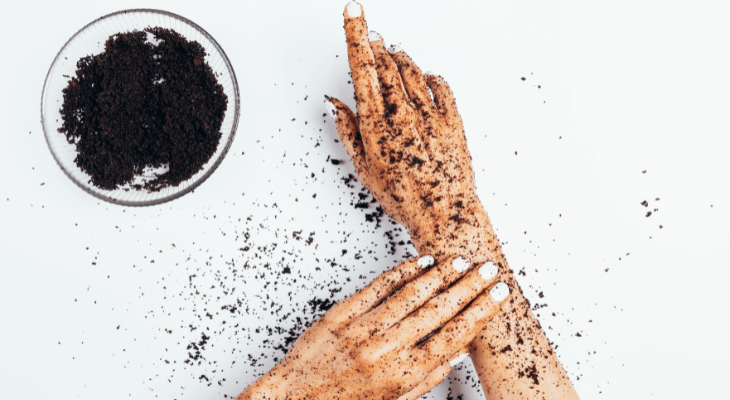
14. Exfoliating Face Mask
Coffee grounds can be used as a natural exfoliating agent in face masks. The grounds help to remove dead skin cells, leaving the skin looking and feeling soft and smooth. To make a coffee ground face mask, mix the used grounds with some honey, yogurt, or coconut oil to create a paste. Apply the paste to your face and let it sit for 10-15 minutes before rinsing it off with warm water.
15. Cellulite Reduction
Coffee grounds are also believed to help reduce the appearance of cellulite. [3] To make a cellulite-reducing body scrub, mix together 1/4 cup used coffee grounds, 3 tablespoons of sugar, and 2 tablespoons of melted coconut oil. Rub the scrub onto the affected areas, leave it on for a few minutes, and then rinse off.
16. Homemade Coffee Soap
Making soap with coffee grounds is easy and makes for a unique, exfoliating soap. You can use a melt-and-pour soap base and add in used coffee grounds for texture and color. Alternatively, you can make cold-process soap from scratch, incorporating brewed coffee into the recipe.
17. Coffee-Infused Eye Care Products
Coffee contains antioxidants and caffeine, making it a popular ingredient in eye creams and serums. To make a simple coffee eye pad, steep two green tea bags and one tablespoon of used coffee grounds in hot water. Once the mixture has cooled, dip cotton pads into the liquid and place them over your eyes for a few minutes. For a DIY coffee eye cream or serum, mix together coffee grounds, coconut oil, and vitamin E oil.
18. Moisturizing Coffee Lip Balm
Coffee lip balm is easy to make and can help exfoliate and moisturize your lips. Mix together equal parts used coffee grounds and coconut oil, then add in beeswax and honey to create a thick, moisturizing balm. Pour the mixture into lip balm tubes and let it cool and harden. Once the mixture has cooled and hardened, your coffee lip balm is ready to use! Apply a small amount to your lips whenever they feel dry or chapped.
19. Natural Nasal Cleansing Solution
Coffee’s strong aroma and flavor can help clear out your sinuses. You can create a nasal palate cleanser by mixing a small amount of used coffee grounds with warm water. Gently inhale the mixture through one nostril and allow it to run out the other. This will help flush out your nasal passages, making it easier to breathe.
Coffee Grounds for DIY Crafts
20. Natural Easter Egg Dye
Last Easter, I decided to try something new and dye my eggs with used coffee grounds. I boiled the coffee grounds in water for a few minutes and let it cool. Then, I placed the hard-boiled eggs in the mixture and let them sit until they reached the desired color. The eggs turned out beautifully with a rich, earthy color.
21. Paper Antiquing
I wanted to create some vintage-looking paper for a craft project, so I decided to try using used coffee grounds to achieve the effect. I brewed some coffee, dipped a sponge in the coffee, and applied it to the paper. After the paper dried, I crumpled it up to enhance the effect. The result was amazing – the paper looked like it had been aged for decades.
22. Natural Fabric Dye
I had a pair of faded jeans that I wanted to restore, so I decided to try using used coffee grounds to dye them. I washed the jeans in a mixture of water and vinegar to help the color adhere better. Then, I brewed a pot of used coffee grounds in water and added the jeans to the mixture, allowing them to soak for several hours. The result was a beautiful, rich color that gave the jeans a new life. Since then, I’ve used coffee to dye other fabrics, including an old cotton shirt that I wanted to give an antique look. The process is simple and effective.
23. Coffee-Scented Candles
Coffee grounds can be used to make homemade candles with a unique scent. Simply mix used coffee grounds with melted wax and pour it into a candle mold. You can add essential oils for a personalized scent, or decorate the candle with coffee beans or grounds for a rustic look.

24. Natural Play Dough
As an uncle of two energetic 4-year-old nephews, I’m always looking for fun and creative ways to keep them entertained. One day, I stumbled upon a recipe for coffee mud play dough and decided to give it a try. I mixed together used coffee grounds, flour, salt, water, and oil to create a unique play dough with a rich coffee aroma. My nephews loved the texture and smell of the play dough and played with it for hours on end.
25. Fossil-Like Coffee Crafts
Used coffee grounds can also be used to create unique fossils. Simply mix together coffee grounds, flour, salt, and water to create a clay-like texture. Shape the mixture into the desired fossil shape and let it dry completely. Once dry, you can use paint or markers to give your fossil a more realistic look.
26. Coffee Surprise Eggs/Rocks
My nephews love surprises, so I decided to try making surprise eggs/rocks using coffee grounds. I mixed together used coffee grounds, flour, water, and small toys to create the egg/rock shape. After letting it dry, my nephews had a blast breaking them open to reveal the surprise toy inside.
27. Coffee Ground Slime
Slime is another fun activity for kids, and you can make it using coffee grounds. Mix together used coffee grounds, glue, and borax to create a coffee slime that is both fun to play with and has a unique smell. You can also add food coloring or glitter to make your coffee slime even more fun.
28. Coffee Ground Painting
Coffee grounds can be used to create unique works of art. Mixing used coffee grounds with a small amount of water can create a dark, rich pigment that can be used for painting. The texture of the grounds can also create a unique effect on the canvas. Experiment with different ratios of water and coffee grounds to find the perfect consistency for your desired effect.
Coffee Grounds for Cooking and Baking
29. Coffee Ground Recipes
Used coffee grounds can add a depth of flavor to dishes and can also be used in a variety of recipes. Here are some ideas for using old coffee grounds in your cooking:
- Coffee Ground Brownies: These fudgy brownies have a subtle coffee flavor and a crunchy texture from the coffee grounds. Recipe from Pact Coffee.
- Coffee Ground Marinade: A delicious and unique marinade for steak or pork, made with brewed coffee and coffee grounds. Recipe from Food Network.
These recipes are a great way to use up old coffee grounds in a creative and delicious way.
30. Meat Rub
Coffee grounds can add depth and richness to meat rubs. When combined with other spices and seasonings, coffee can give your meat a smoky, bold flavor. Try adding used coffee grounds to your next dry rub for pork, beef, or chicken.
31. Pie Shell Baking
Pre-baking empty pie shells can be a challenge because they tend to puff up in the oven. One solution is to use used coffee grounds as pie weights. Simply fill the empty shell with coffee grounds and bake as usual. The grounds will keep the crust from puffing up and can be discarded after baking.

32. Coffee-Flavored Beer Brewing
Coffee can also be used in beer brewing to add a unique flavor profile. The bitterness and roasted flavor of coffee can complement certain beer styles, such as stouts and porters. Breweries often use coffee as an ingredient in their beers, but homebrewers can also experiment with adding coffee to their own brews.
33. Natural Food Coloring
Used coffee grounds can be used as a natural food coloring agent. Mix coffee grounds with hot water and strain out the solids, then use the resulting liquid to add a natural brown hue to foods like cake batters, frostings, and icings.
34. Kitchen Scrubber
As someone who loves to cook, I’m always on the lookout for new ways to keep my kitchen clean. That’s how I discovered that used coffee grounds make a great natural scrubber. I mixed them with a little dish soap and used a scrub brush to tackle some tough stains on my pots and pans. Not only did it remove the stains, but it also left my kitchen smelling fresh and clean.
35. Pots and Pans Cleaning
Sometimes, no matter how hard you scrub, there are still stubborn stains that won’t budge. That’s when I turn to coffee grounds. I mix them with a bit of water to make a paste and apply it to the affected area. After a few minutes, I use a sponge to scrub away the stain, and it usually comes off with ease. It’s a simple and effective solution that I’ll continue to use in my kitchen.
Coffee Grounds for Cleaning and Household Uses
36. Fireplace Cleaner
If you have a fireplace, you know how dirty it can get. Coffee grounds can help absorb the odors and clean up the soot. Once the ashes have cooled down, sprinkle some used coffee grounds on top and let it sit for a few minutes. Use a broom to sweep everything up, and you’ll notice the difference in the air quality.
37. All-Purpose Natural Cleaner
Coffee grounds can also serve as a versatile natural cleaner. When mixed with warm water, they create a paste that can be used to clean surfaces throughout your home. Their gentle abrasive quality can effectively remove grime and buildup from surfaces like toilets, bathtubs, and even countertops. Coffee grounds can be a great alternative to toxic chemical cleaners, providing an eco-friendly option for keeping your home clean. However, it’s important to note that coffee grounds may stain porous surfaces, so they should be avoided in those cases.
38. Furniture Scratch Repair
If you have a piece of furniture with small scratches, coffee grounds can help camouflage them. Simply mix some used coffee grounds with a bit of water to create a paste, and apply it to the scratches with a cotton swab. Let it sit for a few minutes, then wipe away the excess with a damp cloth.

39. Natural Wood Stain
If you have some unfinished wood furniture or other wooden items you’d like to darken, coffee grounds can be a great alternative to the traditional wood stain. Mix some used coffee grounds with hot water to create a strong solution, then apply it to the wood with a brush or cloth. Let it sit for a few minutes, then wipe away the excess and allow the wood to dry.
40. Rust Removal
Coffee grounds can be used to remove rust from metal surfaces. Mix the grounds with a small amount of warm water to create a thick paste. Then apply the paste to the rusted area and let it sit for a few hours. Afterward, scrub the area with a wire brush or a piece of steel wool until the rust is gone. This method works well on small rust stains or spots and is an eco-friendly way to keep your metal surfaces rust-free.
Coffee Grounds for Pest Control
41. Natural Pest Repellent
Used coffee grounds are a great natural pest repellent that I’ve used successfully in my garden. Last summer, I had a problem with snails and slugs eating my plants, so I tried sprinkling used coffee grounds around the garden. To my surprise, it worked like a charm! The snails and slugs were repelled by the smell of the coffee and didn’t come back.
I have also found that coffee grounds can be effective in repelling ants. I had an ant problem in my kitchen, so I sprinkled some coffee grounds around the area where they were entering. The ants quickly disappeared, and they haven’t come back since.
In addition to using coffee grounds as a barrier, they can also be burned to create smoke that repels mosquitoes.
42. Natural Cat Deterrent
If you have trouble keeping cats out of your garden or off of certain surfaces, coffee grounds can help. Put used coffee grounds in areas where you want to deter cats from going. The scent of coffee is unpleasant for cats, and they will avoid those areas.
43. Cockroach Trap
Cockroaches can be difficult to get rid of, but coffee grounds can help. Mix used coffee grounds with water to make a thick paste and place it in areas where cockroaches are present. The caffeine in the coffee grounds will attract the roaches, and the thick paste will trap them.
44. Flea Removal for Pets
Fleas can be a problem for pets, but coffee grounds can help. Rubbing used coffee grounds into your pet’s fur can repel fleas and prevent infestations. Alternatively, you can mix coffee grounds with water to create a spray that can be applied to your pet’s coat. The caffeine in the coffee grounds will kill fleas and prevent them from coming back.
Coffee Grounds for Deodorizing
45. Natural Air Freshener and Deodorizer
Coffee grounds can also be used to freshen up the air in your home. You can place dried coffee grounds in a bowl and leave them in areas where you want to neutralize odors, such as your closet, car interiors, fridge, and microwave. Additionally, you can make a sachet or bag with dried coffee grounds and hang them in areas that need freshening up.
I placed some dried coffee grounds in a bowl and left it in my closet, and to my surprise, it worked wonders! The musty smell was gone, and it left a subtle coffee aroma that I loved.

46. Garbage Disposal Deodorizer
I have found that coffee grounds are a great solution to deodorize my garbage disposal. One day, after cooking a particularly fragrant meal, I noticed a foul odor coming from my sink. I tried pouring some dish soap down the disposal, but it didn’t help. I remembered reading about using coffee grounds for this purpose, so I gave it a try. I ran a handful of used coffee grounds down the disposal and let it run for a few seconds. To my surprise, not only did the scent disappear, but the abrasive texture of the grounds also helped to clean the blades.
47. Hand Deodorizer
If you’ve been cooking with garlic or onions and can’t seem to get rid of the smell on your hands, old coffee grounds can help. Simply rub a small handful of grounds onto your hands, then rinse with soap and water.
48. Shoe Deodorizer
If your shoes have developed an unpleasant odor, coffee grounds can help to eliminate the smell. Simply place some dry used coffee grounds into a pair of old socks and tie off the ends. Then place the socks inside the shoes and let them sit overnight. The coffee grounds will absorb the odor, leaving your shoes smelling fresh and clean.
Coffee Grounds for Outdoor Uses
49. Worm Food and Fish Bait
Used coffee grounds can be a great source of food for fishing bait worms. The nutrients in the coffee can help to grow larger, healthier worms, which in turn can help you catch more fish. Simply mix coffee grounds with other ingredients like eggshells, oatmeal, and cornmeal to make a nutritious bait for your worms.
50. De-icer for Walkways
Coffee grounds can also be used as a de-icer for walkways and other outdoor areas. The grittiness of the coffee grounds can help provide traction on slippery surfaces, while the natural acids can help melt ice and snow. Spread used coffee grounds on your walkways and other areas where you need traction and de-icing. Be sure to keep a container of used coffee grounds handy for this purpose during the winter months.
As someone who enjoys a good cup of coffee every morning, I’ve come to appreciate the many practical uses of used coffee grounds. It’s amazing how a seemingly useless byproduct can have so many benefits for our daily lives. From repelling pests in the garden to deodorizing the garbage disposal, there’s no limit to what you can do with coffee grounds. By finding creative ways to repurpose our used coffee grounds, we not only reduce our waste but also contribute to a more sustainable future. So, the next time you finish your cup of coffee, don’t just throw away the grounds – think about how you can give them a second life.